
⚠️ SPOILER ALERT—Reading this page will reveal several twists, turns, and surprises from the novel. If you haven't read A Note Yet Unsung yet, proceed with caution!
A Note Yet Unsung—Belmont Mansion Novels, Book 3
Thanks for taking yet another journey with me to Belmont Mansion in Nashville, Tennessee in A Note Yet Unsung. When I first began brainstorming the three Belmont Mansion novels, the themes came easily, thanks to Mrs. Adelicia Hayes Franklin Acklen Cheatham, the mistress of Belmont, and her special affinity for three things — art (A Lasting Impression), nature (A Beauty So Rare), and music (A Note Yet Unsung).
So when I came across the history of women in orchestras in my research, I immediately knew the female protagonist in this novel would be a woman aspiring to be in an orchestra. Many of the situations depicted in this story are straight from history, and the struggles Rebekah Carrington endured were common for female musicians of that era.
However, though a very few enormously brave, tenacious, and oh-so-talented women managed to gain acceptance into symphonies in the latter 19th and early 20th centuries, it was generally well into the 1970s before orchestras worldwide finally began to welcome females into their ranks.
Listen to the A Note Yet Unsung Playlist →
Reader Q&A
Q: Did Adelicia Acklen Cheatham own a Stradivarius?
A: As far as we know, Adelicia Cheatham did not own a violin, much less the real Molitar Stradivarius. However, considering her wealth, she could have owned such an instrument if she'd so desired.
At the time of this book's publication, the owner of said Molitar Stradivarius is the famed violinist Anne Akiko Meyers. If you haven't heard Ms. Meyers play the Molitar, please treat yourself and indulge in that pure pleasure. I spent countless hours listening to classical music as I wrote this story—including the work of Anne Akiko Meyers—and my appreciation for classical music and its composers grew infinitely.
View the Molitar Stradivarius →
Q: Is the opera house on the front of the cover real?
A: The opera house depicted on the front cover is the Odessa National Academic Theater of Opera and Ballet in Ukraine (circa 1880s). I took artistic license placing an opera house of this size and elaborate style in Nashville in the 1870s and modeled the opera hall in the story after this theater in Ukraine.
View the Odessa National Academic Theater of Opera and Ballet →
Q: Is Tate Whitcomb's ailment in the book a real illness?
A: The physical ailment Tate suffered from is based on the disorder that some present-day physicians believe plagued Beethoven—the then undiagnosed disorder of otosclerosis (caused when one of the bones in the middle ear, the stapes, becomes stuck in place, hence preventing sound from traveling through the ear). The first successful operation for otosclerosis was performed in 1956.
Q: Whatever became of Adelicia Acklen, her third husband, Dr. William Cheatham, and Belmont Mansion?
A: Months before Adelicia's death in 1887, she sold her beloved Belmont. In 1890, it was opened as a women's academy and junior college. In 1913, the school merged with Ward's Seminary and was renamed Ward-Belmont. The Tennessee Baptist Convention purchased the school in 1951 and created a four-year, coeducational college. Today, the mansion is owned by Belmont University and is operated and preserved by the Belmont Mansion Association, which invites you to visit and walk through wonderfully preserved 19th-century Nashville history.
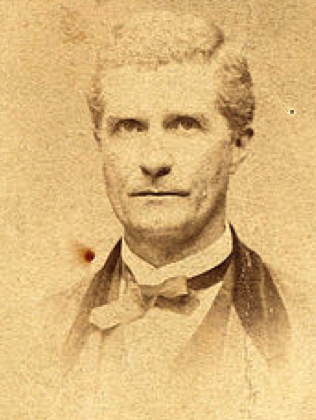
Q: Is the poem in the book, The Last Load, one that you wrote?
A: The poem included in the story entitled The Last Load was written by my father-in-law, Fred Alexander, for his own dear father upon his passing. When I came to that scene between Tate and his father, Angus, Fred's poem just naturally fit into place in my story. Fred passed away in January 2016, so he never knew I was using his poem in this book. But he'd always wanted the two of us to write together. So Fred… thank you for sharing the page with me, as well as your life—and your wonderful son.
Read The Last Load in its entirety →
Visit Belmont Mansion